
Running a Sex Offender Check in Santa Barbara County
The California Megan's Law Website is the official public search for Santa Barbara County. The California Department of Justice maintains the registry. Santa Barbara County does not operate a separate public search that replaces it. Local law-enforcement agencies register people based on where they live and send the information that state law permits DOJ to publish.
Start with a name when the person is known. Use an address, map, city, ZIP, or county filter for place-based awareness. Compare more than one field before deciding that a result is the right person. DOJ warns that names, ages, and addresses alone can cause mistaken identity. A registry result is a notice record, not a forecast of future conduct, and DOJ has not assessed the specific future risk of each displayed person.
Santa Barbara County Megan's Law Entry
The state portal places a disclaimer before its search tools. A visitor must read and accept the conditions before moving to name, location, map, or list results. This gate matters because it states what the public data can and cannot establish. It also explains that information comes from local law-enforcement reports and registrant updates, both of which can change.
The official California Megan's Law landing page shows the public entry point used for Santa Barbara County searches.
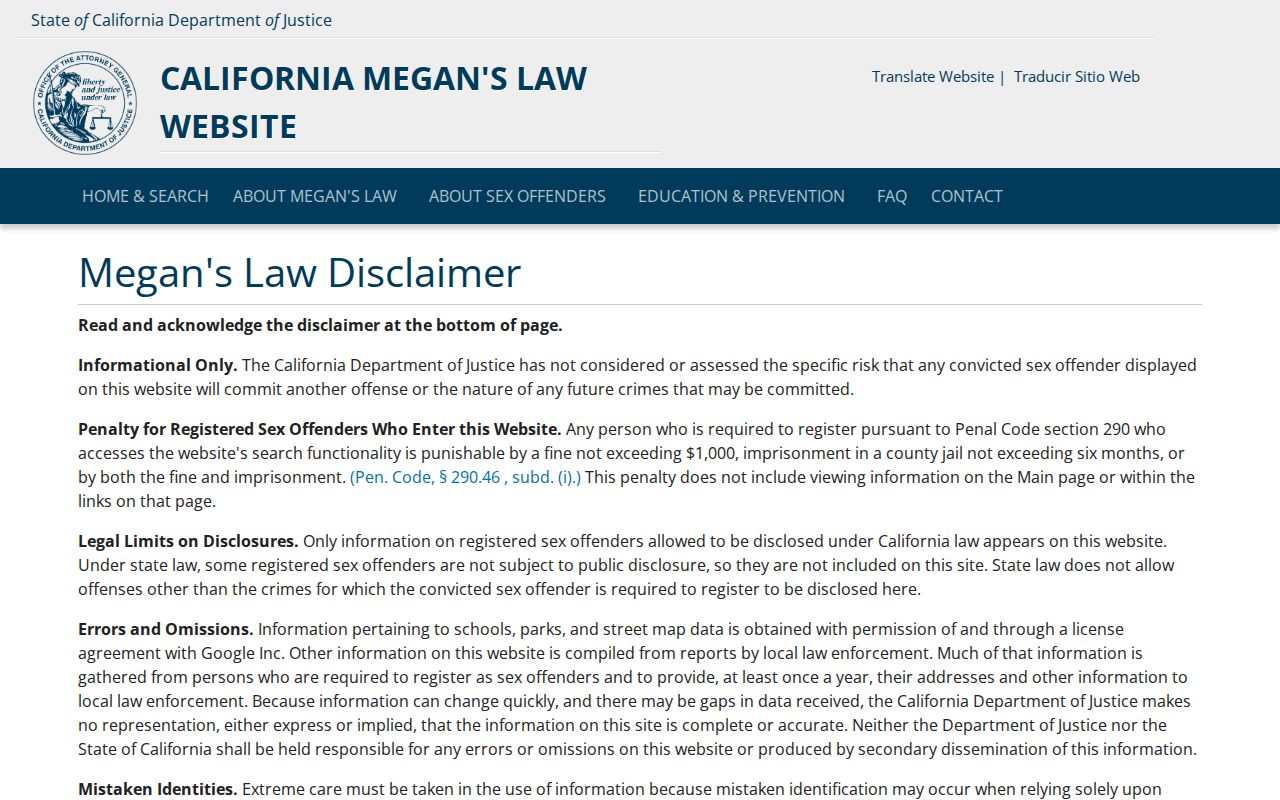
The state portal, rather than a county-made list, keeps the public search in one statewide system.
Note: Search results may change as local agencies submit new registration or correction information.
Searching the California Megan's Law Website
A Santa Barbara County registry check works best when the search begins broad and each likely match is then tested against the full public profile. The portal supports both person-based and place-based paths.
- Open the California Megan's Law Website, read the disclaimer, and agree to its terms before entering the search.
- Choose a name search when the person is known, or use an address, map, city, ZIP, or Santa Barbara County filter for a location search.
- Review the result list and compare the photograph, aliases, date of birth, physical description, and displayed location.
- Open the full public profile and read the registrable offense and address disclosure carefully. Do not infer facts that the profile does not show.
- Report a suspected error through the local registering agency or by email to MegansLaw@doj.ca.gov.
| Field or control | Type | Required | Use |
|---|---|---|---|
| Disclaimer agreement | Checkbox or continue control | Yes | Accept the conditions before search access |
| Name | Text | No | Find a registrant by available name |
| Address or location | Address and map | No | Review a place-based area |
| City, ZIP, or county | Text or filter | No | Narrow results to Santa Barbara County communities |
| Map or list view | Display option | No | Compare geographic and listed results |
Some Santa Barbara County Registrants Are Not Displayed
A zero-result search is not proof that no person is required to register. California publishes only the information allowed under Penal Code section 290.46. DOJ states that some required registrants are not subject to public disclosure and therefore do not appear on the public website. Other profiles may show a limited location rather than a full residence address.
This distinction is vital for community awareness. The state registry is a public-disclosure layer built from the broader law-enforcement registry, not a full copy of every registration file. Search spelling, aliases, updates, and statutory display rules can all affect what appears. Try both name and location methods when appropriate, but do not use a lack of results to make a claim about any named person.
Limited address display is also intentional in some disclosure categories. A map marker or general location should be read only at the level the state supplies, without guessing at a home, workplace, or household.
What a Santa Barbara County Registry Profile Shows
California profiles combine identifying information with the registrable offense and the location detail that law permits for that disclosure category. Read all visible fields together. A single shared name or approximate age is not enough for a sound match.
| Name and aliases | The public name plus known aliases included in the disclosed registry record. |
|---|---|
| Photograph | A state-displayed image used with other identifiers, not as the sole basis for a match. |
| Physical description | Public descriptors may include gender, race, and other identifying traits. |
| Date of birth | A key matching field that should be checked with the name and image. |
| Offense information | Criminal history or registrable offense information allowed for public display. |
| Residence display | A full address or more limited location, depending on the disclosure category. |
| Special adjudication | Prior sexually violent predator adjudication may be shown when applicable. |
| Correction route | Local police or sheriff follow-up, or MegansLaw@doj.ca.gov for a believed error. |
Correcting Santa Barbara County Registry Errors
When a profile appears wrong, first record the exact field and the page where it appears. Compare the photograph, aliases, birth date, physical description, offense data, and location before assuming the record concerns the person you had in mind. DOJ specifically warns that mistaken identity can occur when users rely only on a name, age, and address.
For a data correction, contact the local police department or Sheriff's Office that handles the registration, or email MegansLaw@doj.ca.gov. The correction process is safer and more useful than repeating an uncertain match. Do not copy a profile into a public post while the identity or address is in doubt. Registry data can change quickly as local agencies and registrants submit updates.
Registration Requirements and Levels in California
Senate Bill 384 changed California from a lifetime-only system to tiered minimum registration periods. The tier sets a minimum period, but it does not act as a public risk score. The research confirms adult and juvenile minimum periods below. A specific Santa Barbara County verification schedule was not published in the official sources reviewed, so current reporting duties should be confirmed with the registering police or sheriff office.
| Category | Minimum period | Public meaning |
|---|---|---|
| Adult Tier 1 | 10 years | Lowest adult minimum period; not a prediction of conduct |
| Adult Tier 2 | 20 years | Mid-tier adult minimum period |
| Adult Tier 3 | Life | Lifetime adult registration |
| Juvenile Tier 1 | 5 years | Lower juvenile minimum period |
| Juvenile Tier 2 | 10 years | Higher juvenile minimum period |
Santa Barbara County Registration Contacts
Registration is local even though public search is statewide. A person with registration duties should contact the law-enforcement agency responsible for the residence. Santa Barbara, Santa Maria, and Lompoc operate city police departments. The Santa Barbara County Sheriff's Office serves its own jurisdiction and unincorporated areas. The correct agency can explain appointment and verification steps that are not published on a countywide registry page.
Local agencies collect and verify registration information, but DOJ controls the state public display. That split explains why an address concern may begin with city police or the sheriff while a website error can also be sent to DOJ. It also keeps two different tasks clear: registrants should ask the responsible local agency about their legal duties, while members of the public should use the state portal for permitted search results. An emergency or observed crime belongs with law enforcement, not with an online correction mailbox.
For a member of the public, local offices also provide the best correction route when a residence or identity detail appears stale. They do not replace the California Megan's Law search. No separate Santa Barbara County public registry, registration appointment page, or registration fee was confirmed in the research, so none should be assumed.
Santa Barbara County and NSOPW
The National Sex Offender Public Website adds a cross-state search layer. It is useful when a place-based safety question extends beyond California or when a person may have ties to more than one state. NSOPW draws on participating public registries; it does not replace the California system or expand what California law permits DOJ to disclose.
For a Santa Barbara County address, return to the California Megan's Law profile for the state's current public detail and disclaimer. For another state, follow that state's source record. Different states use different levels, display rules, and update methods. A national result should therefore be read in the context of the originating registry, not treated as one uniform national record.
Lawful Santa Barbara County Registry Use
The registry exists for public protection and informed safety planning. It does not authorize threats, harassment, intimidation, vigilantism, or misuse against a displayed person or household. DOJ also states that it has not assessed each person's future risk. Use the data to understand the public notice, check a location, and choose calm safety steps. Contact law enforcement for a real and immediate concern.
The official Megan's Law disclaimer states the legal limits and warns of criminal prosecution and civil liability for misuse.
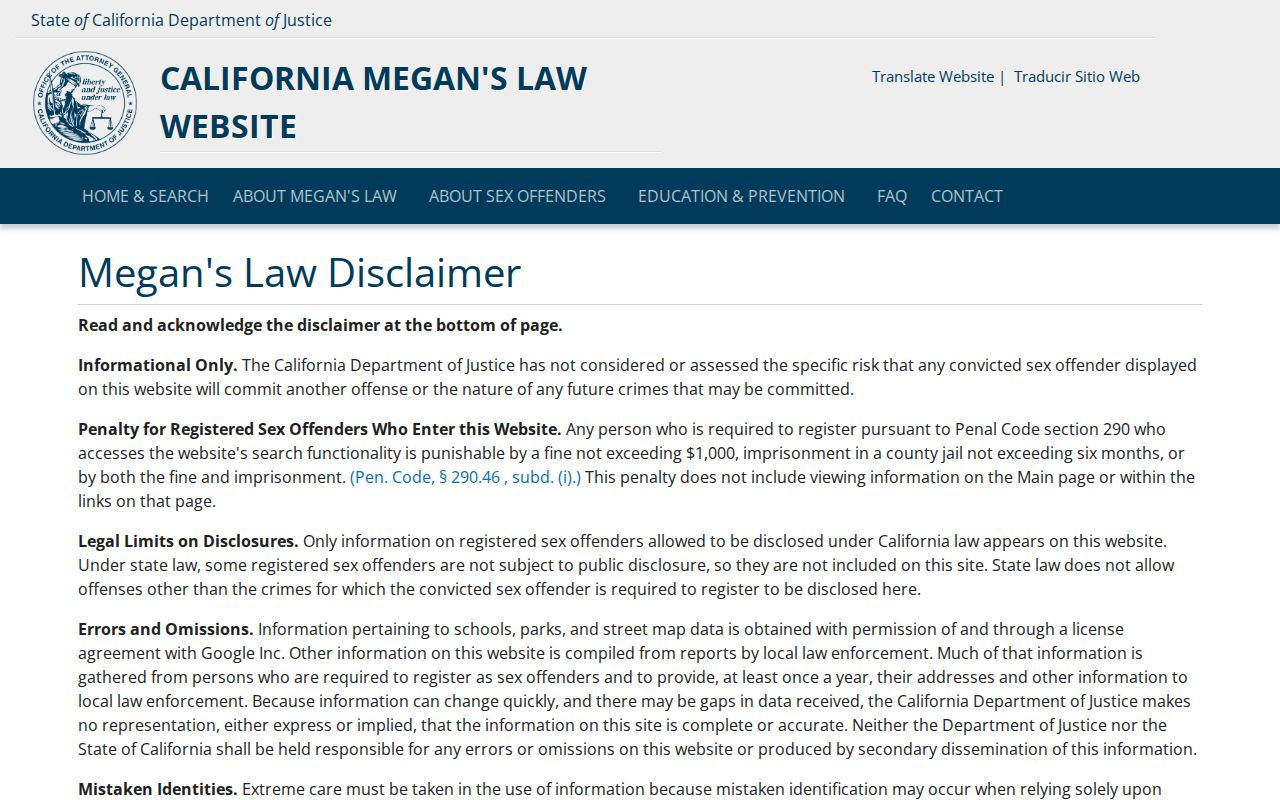
The warning applies before and after a search, including when a user shares or acts on profile information.
Misuse is a crime: California Penal Code section 290.46 prohibits using registry information to commit a crime or harass a registrant, and misuse may also create civil liability. A person required to register who accesses search functionality may face penalties under subsection (i).
Note: Verify a possible match and use official correction channels before sharing registry information.